
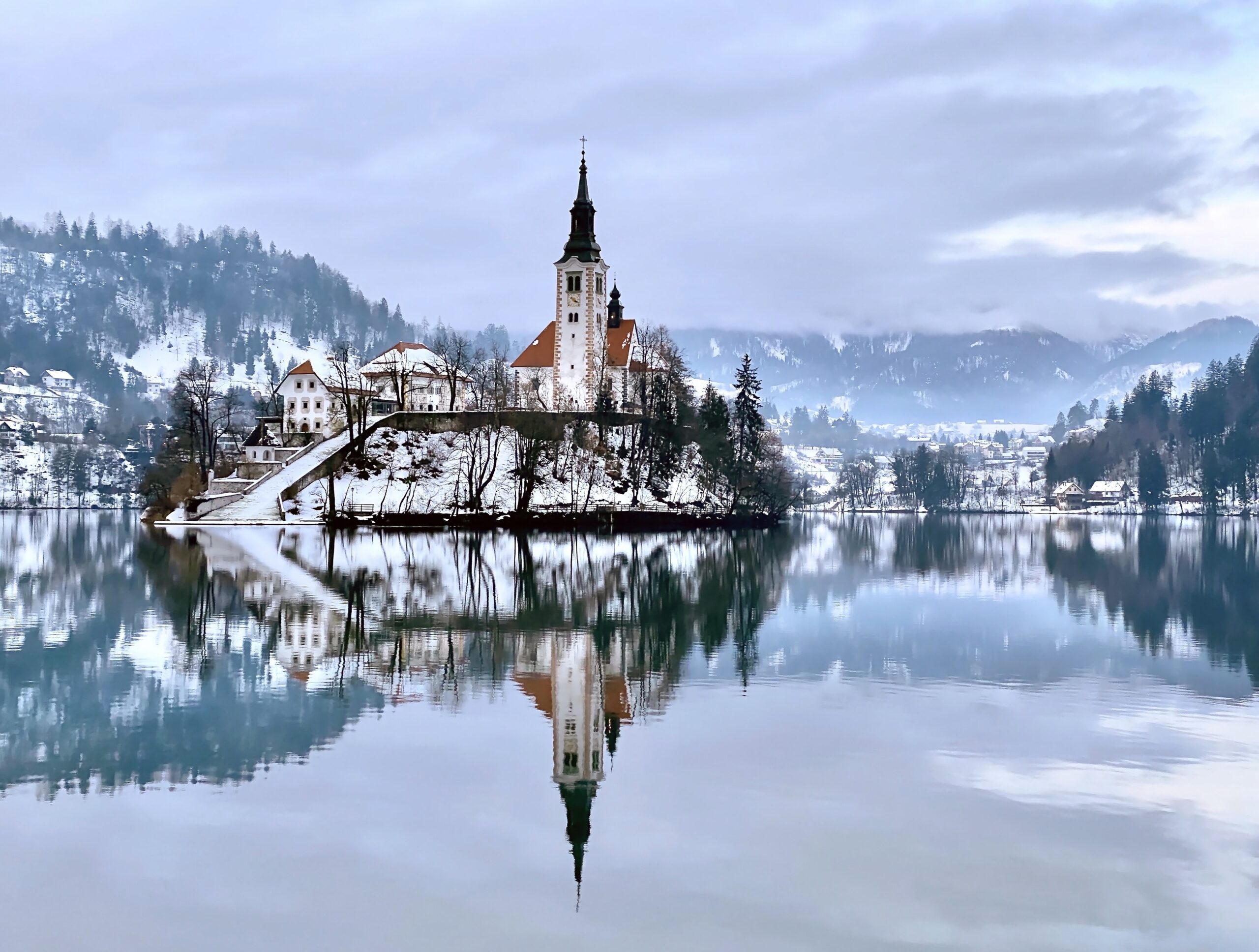
Slovenia is a country in Central Europe, known for its mountains, ski resorts, and lakes. Slovenia is bordered by Austria to the north and Hungary to the far northeast. To the east, southeast, and south, Slovenia shares a 670 kilometers long border with Croatia. Slovenia covers a total land area of 20,271 square kilometers.
*Please note that the official currency is the currency of remuneration when employed through WorkMotion in Slovenia.

Fast-track your talent onboarding while ensuring 100% compliance with local regulations. using an Employer of Record in Slovenia

Calculate net salary post deductions and compare it with the salary in other countries instantly.

Receive process support by an experienced team of experts & pay your talent on time and in their local currency, ideal for companies looking to hire employees or contractors in Slovenia

Easily onboard your remote talent in Slovenia through our Employer of Record (EOR) solution. Our subsidiaries and network partners make this process fast and 100% compliant.


Slovenia is a country in Central Europe, known for its mountains, ski resorts, and lakes. Slovenia is bordered by Austria to the north and Hungary to the far northeast. To the east, southeast, and south, Slovenia shares a 670 kilometers long border with Croatia. Slovenia covers a total land area of 20,271 square kilometers.
*Please note that the official currency is the currency of remuneration when employed through WorkMotion in Slovenia.


The national holidays mentioned below are valid for the year 2026 and are critical for hiring in Slovenia planning:
The national holidays mentioned below are valid for the year 2026.
| January 1 | New Year’s Day | |
| January 2 | Day after New Year’s Day | |
| February 8 | Prešeren Day, Slovenian Cultural Holiday | |
| April 5 | Easter Sunday | Movable |
| April 6 | Easter Monday | Movable |
| April 27 | The day of rebellion against the occupier | |
| May 1 | Labor Day | |
| May 2 | May Day Holiday | |
| May 24 | Whit Sunday | Movable |
| June 25 | Statehood Holiday | |
| August 15 | Feast of the Assumption | |
| October 31 | Reformation Day | |
| November 1 | All Saints' Day | |
| December 25 | Christmas | |
| December 26 | Independence and Unity Day |
The approximate time for sharing the contract with an employee in Slovenia is 10 business days assuming no special requests or changes to our standard employment contract. Any such requests or changes would need to undergo internal and external review, directly leading to a time delay.
NOTE: This number is subject to change and is only an estimation of the Contract Sharing Time. The estimated Contract Sharing Time begins from the moment that WorkMotion has received all required information from both the client and the employee
There is a compulsory social security insurance system in Slovenia. It consists of four schemes namely:
| Benefit | Employer Contribution |
| Pension and disability Insurance | 8.85% |
| Health Insurance | 6.56% |
| Parental Care Insurance | 0.10% |
| Employment Insurance | 0.06% |
| Occupational Injuries and Diseases | 0.53% |
| Total | 16.10% |
Full working time is fixed on a weekly basis and usually amounts to 40 hours a week. It can be shorter, but not less than 36 hours a week. Where there is an increased risk of injury or harm to health, full working time may be less than 36 hours a week. Full working hours may not be spread over less than 4 days a week. During the day’s work, a full-time worker shall be entitled to a break of 30 minutes.
The employer must give employees prior written notice if they have to perform overtime, and must pay them accordingly. However, overtime is limited to a maximum of 8 hours a week, 20 hours a month, or 170 hours a year. Exceptionally, and with the worker’s approval, overtime of up to 230 hours a year is allowed in certain sectors, e.g. healthcare, but this has to be stipulated in the collective agreement for a particular sector or a particular profession.
In Slovenia, probation periods are outlined in the employees’ employment contracts. The probation period can be no more than six months.
In the event of regular dismissal by the worker, the period of notice given is based on the following guidelines.
| Length of Service | Notice Period |
| Up to 1 year | 15 days |
| More than 1 year | 30 days. |
A longer notice period may be agreed with an employment contract or collective agreement, but not longer than 60 days.
Termination by the Employer
In the event of regular dismissal by the employer on business or for the reason of incompetence, the period of notice is given under the following guidelines:
| Length of Service | Notice Period |
| During Probation | 7 days |
| Up to 1 year | 15 days |
| Between 1 and 2 years | 30 days |
| Over 2 years | 30 days plus 2 days for each extra year completed-up to 60 days |
| Over 25 years | 80 days (a collective agreement may give a different notice period, but should not be less than 60 days) |
In the event of dismissal by the employer on a guilty plea, the notice period is 15 days.
Full working time is fixed on a weekly basis and usually amounts to 40 hours a week. It can be shorter, but not less than 36 hours a week. Where there is an increased risk of injury or harm to health, full working time may be less than 36 hours a week. Full working hours may not be spread over less than 4 days a week. During the day’s work, a full-time worker shall be entitled to a break of 30 minutes.
The employer must give employees prior written notice if they have to perform overtime, and must pay them accordingly. However, overtime is limited to a maximum of 8 hours a week, 20 hours a month, or 170 hours a year. Exceptionally, and with the worker’s approval, overtime of up to 230 hours a year is allowed in certain sectors, e.g. healthcare, but this has to be stipulated in the collective agreement for a particular sector or a particular profession.
In Slovenia, probation periods are outlined in the employees’ employment contracts. The probation period can be no more than six months.
In the event of regular dismissal by the worker, the period of notice given is based on the following guidelines.
| Length of Service | Notice Period |
| Up to 1 year | 15 days |
| More than 1 year | 30 days. |
A longer notice period may be agreed with an employment contract or collective agreement, but not longer than 60 days.
Termination by the Employer
In the event of regular dismissal by the employer on business or for the reason of incompetence, the period of notice is given under the following guidelines:
| Length of Service | Notice Period |
| During Probation | 7 days |
| Up to 1 year | 15 days |
| Between 1 and 2 years | 30 days |
| Over 2 years | 30 days plus 2 days for each extra year completed-up to 60 days |
| Over 25 years | 80 days (a collective agreement may give a different notice period, but should not be less than 60 days) |
In the event of dismissal by the employer on a guilty plea, the notice period is 15 days.
There is a compulsory social security insurance system in Slovenia. It consists of four schemes namely:
| Benefit | Employer Contribution |
| Pension and disability Insurance | 8.85% |
| Health Insurance | 6.56% |
| Parental Care Insurance | 0.10% |
| Employment Insurance | 0.06% |
| Occupational Injuries and Diseases | 0.53% |
| Total | 16.10% |
WorkMotion handles the full employment lifecycle in Slovenia through its partner network — from contract generation to monthly payroll remittance — so your company can bring on a Slovenian hire without registering a local entity.
WorkMotion generates an employment contract aligned with Slovenia’s Employment Relationships Act (Zakon o delovnih razmerjih, ZDR-1).
Contracts are prepared in Slovenian, as required by law, and cover all mandatory terms:
Fixed-term contracts are drafted to comply with the two-year maximum duration rule. If the contract does not clearly state a fixed term, Slovenian law treats it as indefinite — a detail that catches many foreign employers off guard.
Before your new hire’s first day, WorkMotion registers them with Slovenia’s mandatory social insurance system.
If you are an employer, you are required to register the employee for compulsory social security insurances on the day they begin working under the employment contract, and no later than by the time they start working.
WorkMotion handles this registration on your behalf, including the required filings with the relevant Slovenian authorities, so your hire is covered from day one.
WorkMotion sets up payroll in euros, aligned with Slovenia’s monthly pay cycle.
Employer contributions to social security in Slovenia are paid as a withholding tax by the employer and also by employees via their monthly salary using their gross salary as the basis.
The rates of contributions paid by employers and employees (in brackets) are:
Employee-side contributions are withheld and remitted to the Financial Administration of the Republic of Slovenia (FURS) within the statutory deadlines.
WorkMotion’s payroll setup accounts for Slovenia’s progressive income tax system, ensuring correct withholding from the first pay run.
WorkMotion administers all mandatory benefits required under Slovenian law. Statutory entitlements include:
In addition to annual leave, WorkMotion manages the mandatory holiday allowance (regres). The statutory minimum holiday leave pay, as of 2025, is set at €1,277.72.
Higher payments are possible if stipulated by a sectoral collective agreement, an individual employment contract, or the employer’s internal regulations.
It must be paid by July 1 each year.
Each month, WorkMotion processes payroll, calculates all deductions, and remits employer and employee contributions to the relevant Slovenian authorities.
Salary payments are made via SEPA bank transfer to the employee’s Slovenian account. WorkMotion issues compliant payslips and maintains the personnel records required for Labour Inspectorate review.
Your finance team receives a single, itemized invoice per employee, gross salary, employer contributions, and the WorkMotion service fee, with no hidden charges.
Slovenian labor law is actively evolving.
The year 2025 has been marked by numerous legislative changes, including efforts to increase flexibility in employment relationships, improve the legal status of foreign workers, and strengthen supervisory mechanisms.
WorkMotion monitors regulatory updates, including changes to collective bargaining agreements that may apply to your employee’s sector, and updates employment terms accordingly.
If a sector-level CBA sets higher minimum wages or leave entitlements than the statutory floor, WorkMotion flags it and applies the correct rate.
For most companies hiring their first employee in Slovenia, EOR is the faster, lower-risk path. Here is how the two options compare:
| Factor | EOR with WorkMotion | Setting up a Slovenia entity |
|---|---|---|
| Setup cost | No entity setup cost; per-employee monthly fee | Minimum share capital of €7,500 for a d.o.o., plus notary fees, professional services, and bank account costs |
| Time to first hire | Days to weeks from signed contract | Incorporation via SPOT can take as little as 8 days for straightforward cases, but obtaining a Slovenian tax number, completing employer registrations, and opening a bank account add time before you can legally employ anyone |
| Ongoing legal exposure | WorkMotion holds employer-of-record status through its partner network; compliance obligations sit with WorkMotion | Your entity is the legal employer; all labor law, payroll, and social contribution obligations fall on your team |
| Ongoing admin burden | Single monthly invoice; WorkMotion manages payroll, benefits, filings, and compliance monitoring | In-house or outsourced payroll, annual reporting, corporate governance, and active compliance tracking required |
| Exit flexibility | Wind down a hire without dissolving a legal entity | Closing a Slovenian entity involves a formal liquidation process |
An EOR is a good fit for companies hiring one to a handful of employees in Slovenia — especially when testing a new market, accessing specific talent, or supporting a remote-first team.
If you reach a point where you have a substantial, permanent Slovenian workforce and want to operate under your own brand as the direct employer, WorkMotion’s Direct Hiring solution can support that transition without requiring you to find a separate provider.
Slovenia has a well-enforced labor law framework.
The Labour Inspectorate runs active inspection campaigns and records over 1,600 violations related to pay alone in 2024. Most of the issues foreign employers run into are not obscure edge cases — they are predictable gaps that arise when teams apply their home-country assumptions to a different legal system.
The annual holiday allowance is not a discretionary bonus.
Every employee who is entitled to annual leave is also entitled to the holiday allowance. This is stipulated in Article 131 (annual leave allowance) of the Employment Relationships Act (ZDR-1).
The allowance is granted regardless of whether the employee uses the full amount of annual leave during the current year or not.
WorkMotion tracks this deadline and processes the payment as part of the standard payroll cycle.
The Act on the Payment of Winter Allowance entered into force in November 2025, introducing a new statutory entitlement that many foreign employers are not yet aware of.
Fines for failure to pay the winter allowance range from €3,000 to €20,000 for a legal entity.
WorkMotion monitors this obligation and ensures it is paid on time.
Collective bargaining agreements are common in Slovenia and may apply to your employee depending on the sector and company size.
If a CBA covers your industry, certain terms like wages, leave, and working hours may be set at the sector level and override what is in the individual contract.
A tech company hiring a developer may face different minimum obligations than a company hiring in construction or banking. WorkMotion identifies which CBA applies and ensures the contract reflects the correct terms.
Fixed-term contracts can be used for specific projects, to replace a temporarily absent employee, or to manage a temporary increase in workload — but they cannot exceed two years.
If the length of the employment contract is not clearly stated in writing, or if the fixed-term contract does not comply with legal requirements, it is assumed to be for an indefinite period.
This is a common trap for companies that roll over short-term contracts without tracking the cumulative duration. WorkMotion flags this before it becomes a compliance issue.
For the first 30 working days of absence in a calendar year, sick leave compensation is paid by the employer, typically at 80% of the employee’s average wage from the previous 12 months.
Foreign employers who budget only for salary often miss this cost. WorkMotion’s country-specific employment cost calculator gives you a good estimate and includes sick leave exposure, so your finance team can forecast accurately.
Slovenian law requires employers to register new hires with the social insurance system before employment begins — not after the first payroll run.
Missing this window creates retroactive liability. WorkMotion initiates registration as part of the onboarding process, before the contract start date.
Slovenia’s combination of steady GDP growth and relatively low unemployment means competition for skilled talent can be strong, especially in higher-paying sectors.
DACH-based B2B SaaS and fintech companies use WorkMotion to hire Slovenian developers, product managers, and data engineers — roles that are difficult to fill domestically and where Slovenia offers a strong talent pool within the EU.
These companies want a compliant employment structure without the overhead of a Slovenian subsidiary for a handful of hires.
Post-Brexit, UK companies hiring in EU member states need a compliant employment structure in each country. Slovenia — an EU and Eurozone member — is an increasingly common hiring destination for UK-headquartered companies building distributed European teams.
WorkMotion’s partner network in Slovenia provides the legal employer infrastructure these companies need without requiring them to establish a local entity.
Companies with a remote-first model and employees across multiple European countries use WorkMotion to consolidate international employment under a single provider.
A company with employees in Germany, Spain, and Poland adding a Slovenian hire does not want to manage a separate local payroll relationship. WorkMotion handles Slovenia alongside the rest of the European footprint throug
WorkMotion hires employees in Slovenia through its partner network rather than a directly owned entity. This means WorkMotion’s local partner acts as the legal employer of record in Slovenia, handling employment contracts, payroll remittances, and statutory registrations, while WorkMotion manages the relationship, compliance oversight, and platform experience on your behalf. The practical outcome for your hire is the same: a locally compliant employment structure without you needing to register a Slovenian company.
ZDR-1 sets mandatory requirements that every employment contract in Slovenia must meet – including being in writing, in Slovenian, with specified working hours, notice periods, and annual leave entitlement. WorkMotion generates contracts aligned with these requirements from the outset, including the correct cap on probation (180 days) and the two-year ceiling on fixed-term arrangements. If a contract does not explicitly state a fixed term, Slovenian law automatically treats it as indefinite – a detail that catches many foreign employers off guard when they attempt to roll over short-term agreements.
Employers in Slovenia contribute approximately 16.64% of gross salary to the social security system, covering pension and disability insurance, health insurance, unemployment insurance, and parental leave. This is on top of gross salary and the WorkMotion service fee, and it is a fixed statutory obligation – not a variable or negotiable cost. WorkMotion’s Employment Cost Calculator provides a full country-specific breakdown for Slovenia, so your finance team can forecast the total cost of employment before making a hiring decision.
Yes – two statutory allowances apply to all employees in Slovenia and carry fines for non-payment. The holiday allowance (regres) must be paid by July 1 each year; the statutory minimum for 2025 is €1,277.72 gross. A winter allowance, introduced by legislation that entered into force in November 2025, entitles employees to 50% of the minimum wage – €638.86 in 2025 – paid in cash by December 18. WorkMotion tracks both deadlines and processes the payments as part of the standard payroll cycle, so your team does not need to monitor Slovenian legislative calendars.
Onboarding through an employer of record in Slovenia typically takes days to a few weeks from signed contract – significantly faster than the months required to incorporate a Slovenian d.o.o., complete employer registrations, and open a local bank account. One compliance-critical step is that employee registration with Slovenia’s social insurance system must happen before the employment start date, not after the first payroll run. WorkMotion initiates this registration as part of the onboarding process to ensure your hire is covered from day one.
Collective bargaining agreements (CBAs) are common in Slovenia and can apply depending on your employee’s sector and company size. Where a CBA covers your industry, it may set minimum wages, leave entitlements, or working hour rules that exceed the statutory floor – and those terms take precedence over what is written in the individual contract. WorkMotion identifies which CBA applies to your hire and ensures the employment contract reflects the correct obligations, rather than defaulting to the statutory minimum and creating retroactive liability.
Discover how WorkMotion helps you hire anywhere, stay compliant, and manage global teams with ease.


Trusted by






![idWjC-9cC6_logos 1 [Vectorized]](https://workmotion.com/wp-content/uploads/2026/02/idWjC-9cC6_logos-1-Vectorized.svg)

Adding {{itemName}} to cart
Added {{itemName}} to cart