
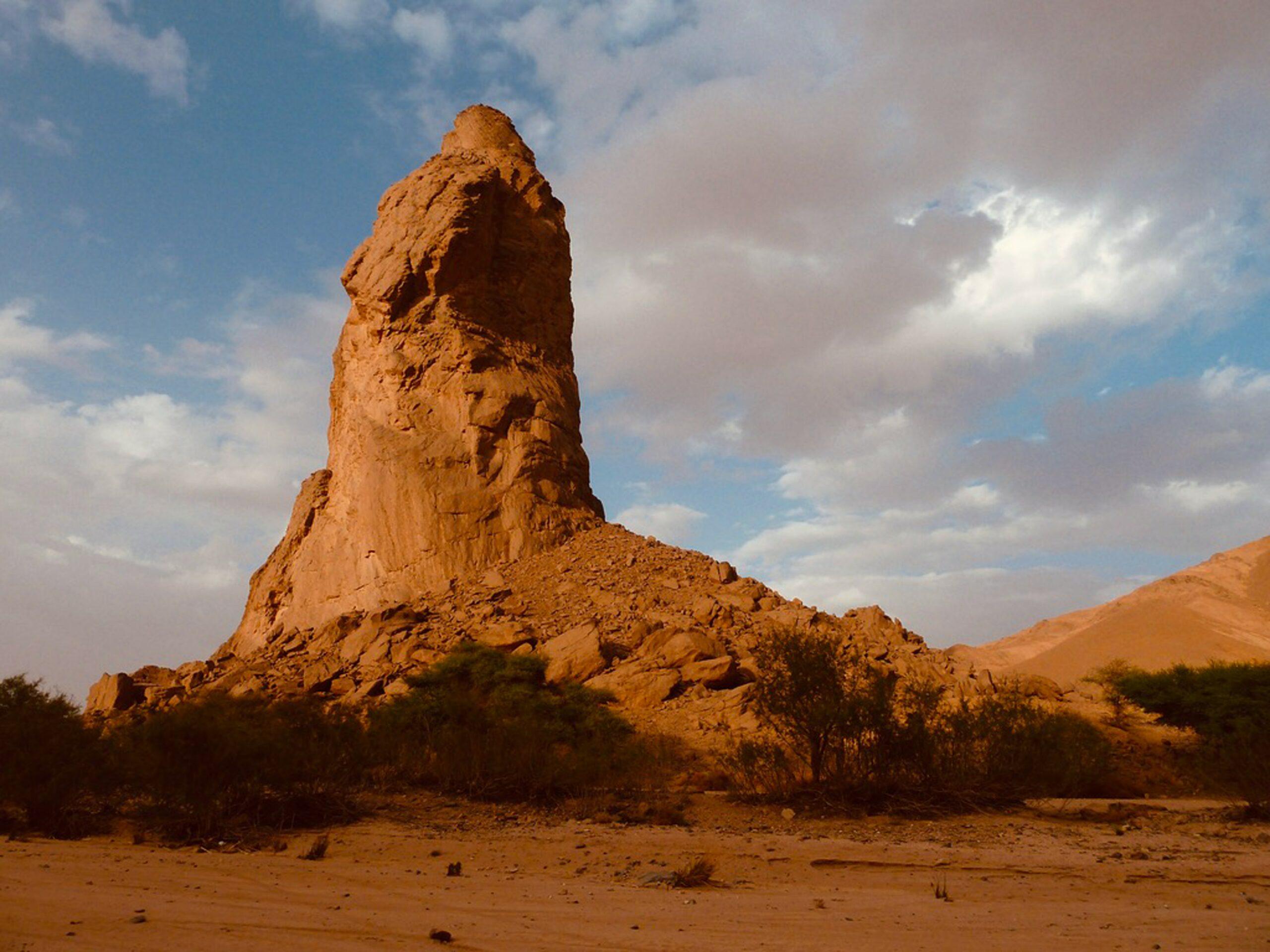
Algeria is a North African country with a Mediterranean coastline and a Saharan desert interior. The country covers an area of 2.38 million square kilometers, making it the world’s tenth-largest nation by area, and the largest nation in Africa. Algeria is bounded to the east by Tunisia and Libya, to the south by Niger, Mali, and Mauritania; to the west by Morocco and Western Sahara. The main economic drivers of Algeria are oil and gas.
*Please note that the official currency is the currency of remuneration when employed through WorkMotion in Algeria.

Fast-track your talent onboarding while ensuring 100% compliance with local regulations. using an Employer of Record in Algeria

Calculate net salary post deductions and compare it with the salary in other countries instantly.

Receive process support by an experienced team of experts & pay your talent on time and in their local currency, ideal for companies looking to hire employees or contractors in Algeria

Easily onboard your remote talent in Algeria through our Employer of Record (EOR) solution. Our subsidiaries and network partners make this process fast and 100% compliant.


Algeria is a North African country with a Mediterranean coastline and a Saharan desert interior. The country covers an area of 2.38 million square kilometers, making it the world’s tenth-largest nation by area, and the largest nation in Africa. Algeria is bounded to the east by Tunisia and Libya, to the south by Niger, Mali, and Mauritania; to the west by Morocco and Western Sahara. The main economic drivers of Algeria are oil and gas.
*Please note that the official currency is the currency of remuneration when employed through WorkMotion in Algeria.


The national holidays mentioned below are valid for the year 2026 and are critical for hiring in Algeria planning:
The national holidays mentioned below are valid for the year 2026.
| January 1 | New Year’s Day | |
| January 12 | Amazigh New Year | |
| March 20-21 | Eid al-Fitr | Movable |
| May 1 | Labor Day | |
| May 27- 28 | Eid al-Adha | Movable |
| June 16 | Islamic New Year | Movable |
| June 26 | Ashura | Movable |
| July 5 | Independence Day | |
| August 25 | Prophet Muhammad's Birthday | Movable |
| November 1 | Revolution Day |
The Algerian Social Security System includes all the branches provided for by modern social security systems, namely:
| Benefit | Employer Contribution | Employee Contribution | Social Work Fund |
|---|---|---|---|
| Social insurance (sickness, maternity, disability and death ) | 12.5% | 1.5% | – |
| Accidents at Work and Occupational Diseases | 1.25% | – | – |
| Retirement | 10% | 6.75% | 0.5% |
| Early Retirement | 0.25% | 0.25% | |
| Unemployment Insurance | 1% | 0.5% | |
| Total | 25% | 9% | 0.5% |
The legal working time is set at 40 hours per week under normal working conditions. It is spread over at least five working days. When the working hours are carried out under the regime of the continuous session, the employer is required to arrange a break time that may not exceed one hour including half an hour considered as working time.
The employer may require any worker to work overtime in excess of the statutory working time without such hours exceeding 20% of the said statutory working time. Overtime worked gives rise to the payment of an increase which may in no case be less than 50% of the normal hourly wage.
The newly recruited worker may be subject to a probationary period of not more than six months. This period may be extended to 12 months for highly qualified jobs.
Dismissal entitles the worker who has not committed a serious misconduct to a period of leave, the minimum duration of which is fixed in collective agreements and employment contracts. During the duration of the leave,the dismissed worker is entitled to two hours per day, cumulative, ,to look for another job.
The legal working time is set at 40 hours per week under normal working conditions. It is spread over at least five working days. When the working hours are carried out under the regime of the continuous session, the employer is required to arrange a break time that may not exceed one hour including half an hour considered as working time.
The employer may require any worker to work overtime in excess of the statutory working time without such hours exceeding 20% of the said statutory working time. Overtime worked gives rise to the payment of an increase which may in no case be less than 50% of the normal hourly wage.
The newly recruited worker may be subject to a probationary period of not more than six months. This period may be extended to 12 months for highly qualified jobs.
Dismissal entitles the worker who has not committed a serious misconduct to a period of leave, the minimum duration of which is fixed in collective agreements and employment contracts. During the duration of the leave,the dismissed worker is entitled to two hours per day, cumulative, ,to look for another job.
The Algerian Social Security System includes all the branches provided for by modern social security systems, namely:
| Benefit | Employer Contribution | Employee Contribution | Social Work Fund |
|---|---|---|---|
| Social insurance (sickness, maternity, disability and death ) | 12.5% | 1.5% | – |
| Accidents at Work and Occupational Diseases | 1.25% | – | – |
| Retirement | 10% | 6.75% | 0.5% |
| Early Retirement | 0.25% | 0.25% | |
| Unemployment Insurance | 1% | 0.5% | |
| Total | 25% | 9% | 0.5% |
Using an Algerian employer of record through WorkMotion’s partner network means you don’t need a registered entity in-country before making your first hire. Here’s how the process works from contract to payroll.
Employment contracts in Algeria must be written in Arabic and denominated in Algerian Dinar (DZD). A contract in any other language, or referencing a foreign currency, does not meet local requirements.
WorkMotion generates a locally compliant employment contract that covers all mandatory terms:
The contract is prepared through WorkMotion’s partner network and reviewed against Algeria’s Labor Code before it reaches your new hire.
Before payroll can run, the employer of record must be registered with Algeria’s key statutory bodies: the Caisse Nationale des Assurances Sociales (CNAS) for healthcare and social security, and the Caisse Nationale de Retraite (CNR) for pensions.
WorkMotion’s in-country partner handles this registration on your behalf, obtaining the necessary employer identification numbers and ensuring your hire is enrolled in the national social security system from day one.
Algeria operates a monthly payroll cycle, with salaries paid at the end of each month in Algerian Dinar.
Employer social security contributions total approximately 26% of gross salary, covering retirement, illness, unemployment, and work accidents. Employee contributions are approximately 9% of gross salary.
Personal income tax is applied at progressive rates up to 35%.
WorkMotion calculates gross-to-net salary, applies all required deductions, and processes contributions to CNAS, CNR, and the tax directorate by their monthly deadlines.
Algerian law requires employers to provide a defined set of statutory benefits:
WorkMotion’s partner manages enrollment and administration of all statutory entitlements.
Each month, WorkMotion processes payroll, remits employer and employee contributions to CNAS and CNR, and submits the required declarations to Algerian tax authorities.
Algerian labor law requires employers to issue a detailed payslip to each employee at the time of salary payment, covering:
WorkMotion handles payslip generation and delivery as part of the monthly payroll cycle.
Algeria’s labor regulations, including minimum wage levels, contribution rates, and leave entitlements, are subject to periodic revision.
The national minimum wage, for example, was updated to DZD 24,000 per month effective January 1, 2026.
WorkMotion monitors regulatory changes and updates employment terms accordingly, so your team’s contracts and payroll remain compliant without you tracking every legislative update.
Hiring through an Algeria Employer of Record is not the only path. But for most companies hiring one to a handful of people, entity setup rarely makes commercial sense.
Here’s how the two options compare.
| Factor | WorkMotion EOR | Own Algeria Entity |
| Setup cost | Per-employee monthly fee; no incorporation cost | Entity setup costs in Algeria differ greatly according to company type and legal structure |
| Time to first hire | Days from signed contract | Estimated 3–6 months based on registration, approvals, and capital requirements |
| Ongoing legal exposure | Compliance managed by WorkMotion’s partner network | Full legal employer liability sits with your entity |
| Ongoing admin burden | Payroll, contributions, declarations handled by WorkMotion | Monthly filings with CNAS, CNR, and tax authorities managed internally |
| Exit flexibility | Scale down or exit without entity wind-down costs | Closing an Algerian entity involves formal dissolution procedures |
EOR in Algeria fits companies that need to hire quickly, test the market, or maintain a small team without committing to permanent establishment.
If you’re planning to build a large, long-term operation in Algeria and need direct employment control at scale, entity setup may be worth evaluating. But for most SMEs making their first hires in-country, the EOR route removes months of administrative delay.
Use WorkMotion’s Employment Cost Calculator to estimate the full cost of hiring in Algeria, including gross salary, employer contributions, and service fees, before you commit.
Algeria’s Labor Code is detailed, and the gaps between what foreign employers assume and what local law actually requires are where compliance problems start.
Many foreign employers draft contracts in English or French and attach an Arabic translation. Under Algerian law, the Arabic version is the legally binding document.
A contract that isn’t drafted in Arabic from the outset creates ambiguity in any dispute. WorkMotion’s partner generates contracts in Arabic as the primary document, with the employment terms denominated in Algerian Dinar as required.
Companies used to a Monday-to-Friday calendar often schedule onboarding, payroll cut-offs, and HR processes around a Western working week. In Algeria, the standard working week runs Sunday to Thursday, with Friday and Saturday as rest days.
Getting this wrong affects overtime calculations, public holiday entitlements, and payroll timing. WorkMotion’s payroll setup reflects the correct Algerian working week from day one.
Foreign employers sometimes treat termination for misconduct as a straightforward decision.
Under Algerian law, terminating an employee for misconduct without first exhausting disciplinary options constitutes unfair dismissal, exposing the employer to severance compensation liability.
WorkMotion’s partner manages the termination process in line with the Labor Code, including notice period requirements and, where applicable, labor inspectorate notification.
Many employers assume probation periods are short and informal. In Algeria, the standard maximum probation period is up to six months, depending on the role.
Employees on probation are not entitled to the standard notice period.
Getting the probation terms wrong in the contract, or failing to document them at all, creates legal uncertainty if the relationship doesn’t work out. WorkMotion’s contracts specify probation terms correctly for each hire.
Algeria allows trade unions to negotiate collective agreements that provide employees with rights beyond the statutory floor. These agreements can affect pay rates, working conditions, and additional leave entitlements.
Foreign employers who rely solely on the Labor Code without checking whether a sector-level collective agreement applies may find themselves non-compliant.
WorkMotion’s partner monitors applicable collective agreements for each hire.
Algerian regulations require employers to maintain detailed payroll and employment records, including wage calculations, deductions, and contribution payments, for a statutory period of four years.
Foreign employers managing payroll informally or through spreadsheets often lack the documentation structure to meet this requirement. WorkMotion maintains compliant payroll records on your behalf throughout the employment relationship.
Mid-sized B2B SaaS and software companies headquartered in Germany or the Netherlands, typically 50 to 300 employees, use WorkMotion’s EOR in Algeria to hire software engineers and IT specialists they can’t find locally.
Algeria has a young, growing population with a significant share under 25, and increasing output from engineering and technology programs.
For a company with a vacancy it can’t fill in Berlin or Amsterdam, Algeria offers a talent pool that’s accessible through EOR without any entity setup.
Companies building a broader North African engineering base often pair Algerian hires with talent in Egypt, accessed through the same EOR model.
Growing e-commerce businesses and digital agencies based in the UK use WorkMotion to hire customer support leads, operations coordinators, and Arabic-language content specialists in Algeria.
The time zone overlap with Europe is workable, the talent pool for Arabic-language roles is strong, and EOR removes the need to incorporate locally for what may start as one or two hires.
WorkMotion’s partner network handles the compliance so the UK team can focus on onboarding the person, not the paperwork.
Algeria is actively investing in renewable energy and infrastructure, creating demand for international companies with relevant expertise.
European green tech firms, often 100 to 500 employees, use WorkMotion’s EOR to hire a local market development or business development hire in Algeria before committing to a full entity.
EOR gives them the speed to move when a market opportunity opens, without a six-month incorporation process blocking the hire.
You’ve identified the right person in Algeria. The question is how quickly you can get them legally employed, on payroll, and contributing to your team, without building local HR infrastructure from scratch.
WorkMotion handles the compliance layer through its partner network in Algeria:
Whether you’re making your first hire in-country or adding to an existing team, the EOR model removes the entity setup barrier and gets your new hire onboarded in days, not months.
WorkMotion provides EOR in Algeria through a vetted partner network rather than a directly owned entity. This means your hire is legally employed through WorkMotion’s in-country partner, which holds the necessary registrations with Algerian statutory bodies, including CNAS and CNR, and manages payroll, contracts, and compliance on your behalf. The partner network model is standard for Algeria and does not affect the compliance quality of the employment relationship.
Algeria’s national minimum wage (SNMG) was updated to DZD 24,000 per month effective January 1, 2026. Any employment contract arranged through an Algeria employer of record must meet or exceed this floor. Sector-level collective agreements may set higher minimums for specific industries, so when planning compensation for a hire in Algeria, it’s worth confirming whether a collective agreement applies to the role, as this can affect the minimum compliant salary beyond the statutory baseline.
Algeria’s Labor Code requires employers to follow a formal disciplinary process before dismissing an employee for misconduct. Skipping this step exposes the employer to unfair dismissal claims and severance liability. For terminations by mutual agreement or redundancy, specific procedural requirements apply, including notice periods that vary by seniority and, in some cases, notification to the labor inspectorate. WorkMotion’s partner manages the full termination process in line with the Labor Code, reducing the legal exposure that comes from applying a foreign company’s standard offboarding approach to an Algerian employment relationship.
Employer social security contributions in Algeria total approximately 26% of gross salary, covering retirement (CNR), healthcare and social security (CNAS), unemployment insurance, and work accident coverage. Employee contributions are approximately 9% of gross salary, deducted at source through payroll. These contribution rates are a significant component of the total cost of employment, and WorkMotion’s Employment Cost Calculator lets you model the full employer cost for a specific salary level before finalizing your hiring budget.
Algerian labor law permits fixed-term contracts (CDD), but their use is restricted to specific circumstances, including seasonal work, temporary replacement of an absent employee, or a defined project with a clear end date. Using a fixed-term contract outside these permitted categories risks the contract being reclassified as indefinite by Algerian courts, which carries additional obligations around termination. For most standard hires through an Algeria EOR, an indefinite-term contract (CDI) is the appropriate structure, and WorkMotion’s partner will advise on the correct contract type based on the nature of the role.
Algeria’s standard working week runs Sunday to Thursday, with Friday and Saturday as rest days, not the Monday-to-Friday calendar that most European HR teams operate on. This affects how overtime is calculated, when public holidays fall relative to the working week, and how payroll cut-off dates align with your internal processes. When setting up an EOR in Algeria, WorkMotion’s partner configures payroll and employment terms around the correct Algerian working week from the outset, preventing the calculation errors that arise when a European calendar is applied by default.
Once you’ve confirmed the hire and agreed on compensation, WorkMotion’s partner generates a locally compliant employment contract in Arabic, denominated in Algerian Dinar, and handles registration with CNAS and CNR before the first payroll run. The onboarding timeline depends on document readiness from the employee and the complexity of the role, but the EOR model removes the months-long delay associated with setting up your own Algerian entity.
Discover how WorkMotion helps you hire anywhere, stay compliant, and manage global teams with ease.


Trusted by







![idWjC-9cC6_logos 1 [Vectorized]](https://workmotion.com/wp-content/uploads/2026/02/idWjC-9cC6_logos-1-Vectorized.svg)

Adding {{itemName}} to cart
Added {{itemName}} to cart