
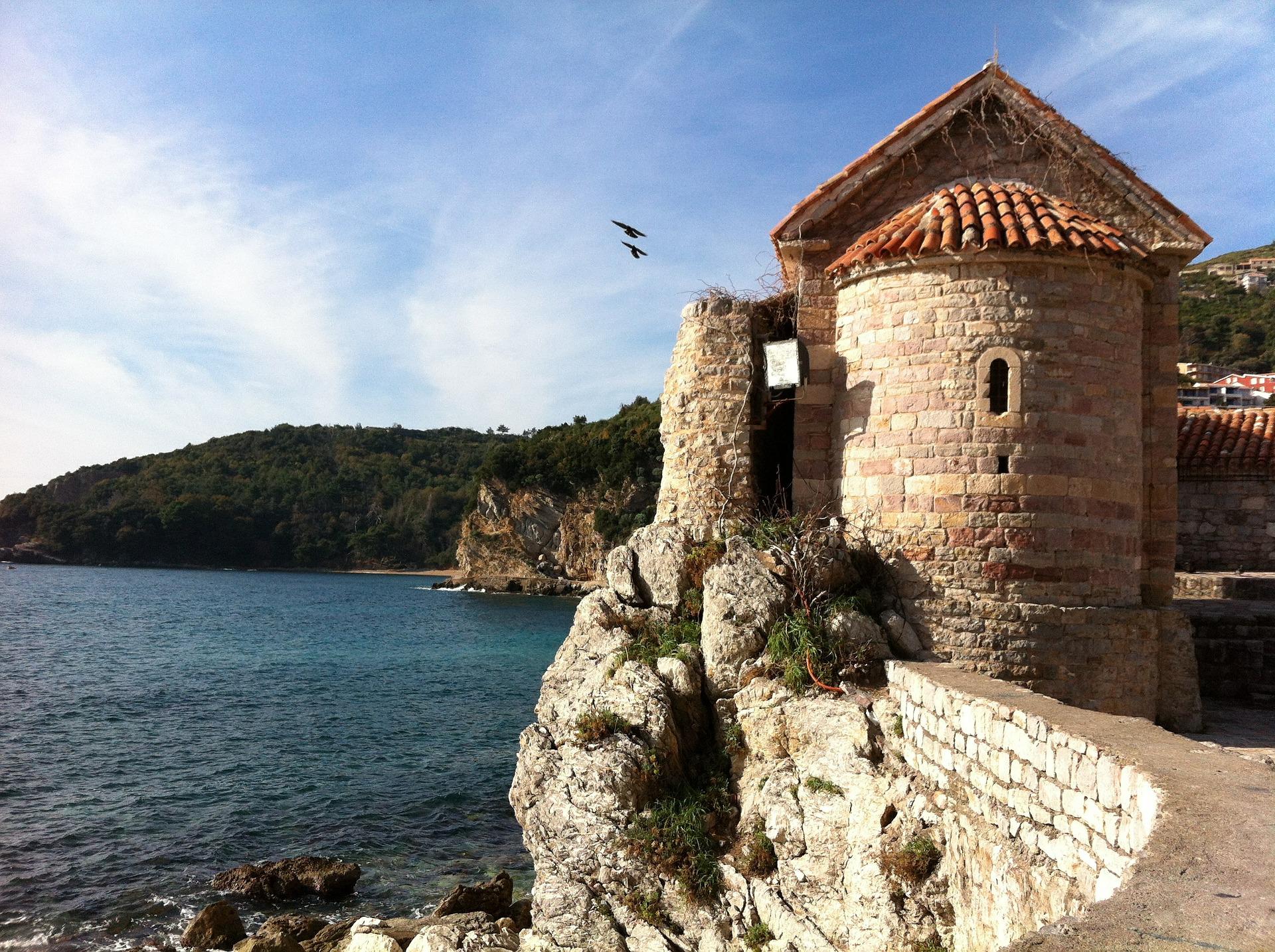
Montenegro is a Balkan country with rugged mountains, medieval villages, and a narrow strip of beaches along its Adriatic coastline. It is bounded by the Adriatic Sea and Croatia (southwest), Bosnia and Herzegovina (northwest), Serbia (northeast), Kosovo (east), and Albania (southeast). The service-based industry is the major economic driver of the country’s economy.
*Please note that the official currency is the currency of remuneration when employed through WorkMotion in Montenegro.

Fast-track your talent onboarding while ensuring 100% compliance with local regulations. using an Employer of Record in Montenegro

Calculate net salary post deductions and compare it with the salary in other countries instantly.

Receive process support by an experienced team of experts & pay your talent on time and in their local currency, ideal for companies looking to hire employees or contractors in Montenegro

Easily onboard your remote talent in Montenegro through our Employer of Record (EOR) solution. Our subsidiaries and network partners make this process fast and 100% compliant.


Montenegro is a Balkan country with rugged mountains, medieval villages, and a narrow strip of beaches along its Adriatic coastline. It is bounded by the Adriatic Sea and Croatia (southwest), Bosnia and Herzegovina (northwest), Serbia (northeast), Kosovo (east), and Albania (southeast). The service-based industry is the major economic driver of the country’s economy.
*Please note that the official currency is the currency of remuneration when employed through WorkMotion in Montenegro.


The national holidays mentioned below are valid for the year 2026 and are critical for hiring in Montenegro planning:
The national holidays mentioned below are valid for the year 2026.
| January 1-2 | New Year's Day and Holiday | |
| January 6-8 | Orthodox Christmas Holiday | Movable |
| April 10 | Orthodox Good Friday | Movable |
| April 13 | Orthodox Easter Monday | Movable |
| May 1-2 | Labour Day Holiday | |
| May 21-22 | Independence Day Holiday | |
| July 13-15 | National Day Holiday | |
| November 13-14 | Njegos Day |
The approximate time for sharing the contract with an employee in Montenegro is 7 business days assuming no special requests or changes to our standard employment contract. Any such requests or changes would need to undergo internal and external review, directly leading to a time delay.
NOTE: This number is subject to change and is only an estimation of the Contract Sharing Time. The estimated Contract Sharing Time begins from the moment that WorkMotion has received all required information from both the client and the employee.
The Montenegrin social security scheme provides basic coverage including:
An overview of employer contributions towards statutory employee benefits is presented below:
| Benefits | Employer Contribution |
| Pensions and Disability Insurance | 5.5% |
| Unemployment Insurance | 0.5% |
NOTE: Employers are required to pay an additional amount of between 6% and 28% of the gross wage towards the Pension and Disability Insurance for employees working in difficult and dangerous conditions for health.
Full-time work is 40 hours a working week. A collective agreement may determine full-time work shorter than 40 hours in a working week.
An employee who works full time has the right to rest during the working day for at least 30 minutes. An employee who works longer than four and shorter than six hours a day has the right to rest during the working day for at least 15 minutes.
Overtime may only last as long as it is necessary to eliminate the causes for which it was introduced, provided that working hours do not exceed 48 hours per week on average, within a period of four months. The maximum duration of weekly working hours may not exceed 50 hours. A collective agreement may be provided for a maximum duration of 250 hours on an annual basis.
The overtime rate is determined in collective agreements or employment contracts.
The probation period must not exceed six months. The length of the probationary period and the manner of conducting the probationary period must be determined by a collective agreement with the employer or an employment contract.
A written notice must be given at least 30 days before the date of termination of employment unless the contract or collective agreement states otherwise.
Full-time work is 40 hours a working week. A collective agreement may determine full-time work shorter than 40 hours in a working week.
An employee who works full time has the right to rest during the working day for at least 30 minutes. An employee who works longer than four and shorter than six hours a day has the right to rest during the working day for at least 15 minutes.
Overtime may only last as long as it is necessary to eliminate the causes for which it was introduced, provided that working hours do not exceed 48 hours per week on average, within a period of four months. The maximum duration of weekly working hours may not exceed 50 hours. A collective agreement may be provided for a maximum duration of 250 hours on an annual basis.
The overtime rate is determined in collective agreements or employment contracts.
The probation period must not exceed six months. The length of the probationary period and the manner of conducting the probationary period must be determined by a collective agreement with the employer or an employment contract.
A written notice must be given at least 30 days before the date of termination of employment unless the contract or collective agreement states otherwise.
The Montenegrin social security scheme provides basic coverage including:
An overview of employer contributions towards statutory employee benefits is presented below:
| Benefits | Employer Contribution |
| Pensions and Disability Insurance | 5.5% |
| Unemployment Insurance | 0.5% |
NOTE: Employers are required to pay an additional amount of between 6% and 28% of the gross wage towards the Pension and Disability Insurance for employees working in difficult and dangerous conditions for health.
WorkMotion operates in Montenegro through its partner network, giving your company access to compliant employment in the country without the need to establish a local entity.
Here is how the process works from contract to payroll.
WorkMotion generates an employment contract aligned with Montenegro’s Labour Law (Zakon o radu).
The contract must be in writing and cover the following, all mandatory under Montenegrin law:
Where relevant, documentation is provided in Montenegrin or in a bilingual format to meet official requirements.
Fixed-term contracts are capped at 24 months under the 2024 Labour Law amendments. After that threshold, only an indefinite-term agreement is permitted with the same employee.
WorkMotion’s contract templates reflect these rules from day one.
Before work begins, the employee must be registered with the Tax Administration of Montenegro and enrolled in the mandatory social insurance schemes.
WorkMotion’s partner network handles this registration step, ensuring the employment relationship is formally declared to the relevant authorities before the first payslip is issued.
Montenegro operates a monthly payroll cycle, with salaries due by the last day of each month.
WorkMotion sets up payroll in euros, Montenegro’s official currency, and calculates all statutory deductions.
Personal income tax applies progressively:
An additional municipal surtax applies in Podgorica and Cetinje at 15%, and 13% in other regions.
Monthly tax declarations and contribution statements must be submitted to the Tax Administration by the 15th of the following month. WorkMotion handles this reporting on your behalf.
Following the October 2024 reforms under Montenegro’s Evropa Sad 2 programme, the employer’s pension and disability insurance contribution was removed entirely.
The employer’s only remaining mandatory social contribution is 0.5% for unemployment insurance.
Employee-side contributions cover:
That gives a combined employee contribution rate of 10.5%, among the lowest in Europe.
WorkMotion enrolls employees in all applicable schemes and manages contribution remittance accurately.
Montenegro’s minimum wage is tiered by education level: €600 net per month for roles requiring up to a high school diploma, and €800 net for roles requiring a university degree or higher.
WorkMotion verifies that every employment arrangement meets the applicable minimum before contracts are issued.
Statutory leave entitlements include a minimum of 20 working days of annual leave per year, with at least 10 consecutive days to be taken within the calendar year.
Maternity leave covers 98 days of fully paid leave, and parents are entitled to one year of shared parental leave. WorkMotion administers these entitlements in line with current Montenegrin law.
Each month, WorkMotion processes payroll in euros, remits all taxes and social contributions to the Tax Administration, and provides employees with detailed payslips showing gross salary, itemized deductions, and net pay.
Employer obligations, including the 0.5% unemployment contribution, are calculated and paid within the statutory deadline.
Montenegro’s labour regulations have seen significant changes in recent years, including the 2024 amendments to fixed-term contract durations, minimum wage increases, and the restructuring of social contributions.
WorkMotion monitors regulatory updates and adjusts employment terms, contribution calculations, and contract conditions accordingly, so your team stays compliant without tracking Montenegrin legislative changes internally.
Using an employer of record in Montenegro removes the need to incorporate locally before making your first hire.
Here is how the two paths compare.
| EOR via WorkMotion | Own Entity in Montenegro | |
|---|---|---|
| Setup cost | No incorporation cost; per-employee monthly fee | Estimates online vary widely, but professional fees typically fall somewhere around €2,000–€11,000+ depending on complexity, plus ongoing accounting and compliance costs |
| Time to first hire | Days from signed contract | Roughly 1–6 weeks for basic registration, going by available estimates; longer if banking, permits, and payroll infrastructure are set up from scratch |
| Ongoing legal exposure | Compliance managed by WorkMotion’s partner network | Full legal responsibility sits with your entity; Labour Inspectorate can inspect without notice and issue fines of €500–€20,000 per violation |
| Ongoing admin burden | Payroll, tax filings, and contribution remittance handled by WorkMotion | Monthly tax declarations, social contribution filings, payroll records, and UBO registry maintenance required |
| Exit flexibility | Wind down employment without dissolving a legal entity | Liquidation requires shareholder resolution, asset inventory, settlement of all employee obligations, and multiple filings with the company registry |
EOR is the right fit when you need to hire one or a small number of employees in Montenegro quickly, test the market before committing to a permanent structure, or avoid the overhead of maintaining a local entity for a limited headcount.
If you are planning a large, permanent operation in Montenegro with significant local management infrastructure, entity setup may be worth evaluating alongside EOR.
Use WorkMotion’s Employment Cost Calculator to estimate the total monthly cost of employing someone in Montenegro, including salary, contributions, and service fees.
Montenegro’s labour framework has changed substantially since 2019, with further amendments in 2021 and 2024.
Foreign employers relying on outdated information, or assuming Montenegrin rules mirror those of neighbouring EU countries, run into compliance problems that are entirely avoidable.
Many foreign employers issue fixed-term contracts expecting to renew them indefinitely.
Under the 2024 Labour Law amendments, the maximum duration of a fixed-term arrangement is 24 months. After that point, the employer must either offer an indefinite-term contract or end the employment relationship.
Continuing to issue fixed-term contracts beyond this threshold creates legal exposure. WorkMotion’s contract generation reflects the current cap and flags renewal timelines before they become a compliance issue.
Montenegrin law requires a written employment contract to be in place before the employee begins work, not after.
Foreign employers who allow a new hire to start while paperwork is still being finalized are operating outside the law from day one.
WorkMotion generates and delivers contracts before onboarding begins, so there is no gap between the employee’s start date and their formal employment status.
Before October 2024, employers in Montenegro paid substantial pension and disability insurance contributions.
The Evropa Sad 2 reforms removed the employer’s pension and disability contribution entirely, leaving only a 0.5% unemployment insurance contribution as the mandatory employer-side social charge.
Foreign employers using pre-2024 cost models are likely overestimating their total employment costs, or, if they have not updated their payroll setup, miscalculating deductions. WorkMotion’s payroll engine reflects the current contribution structure.
Montenegro’s minimum wage is not a single flat rate.
Since October 2024, it applies at two levels: €600 net for roles up to skill grade V (high school diploma or lower), and €800 net for roles at grade VI and above (university degree or higher).
Employers who apply a single minimum across all roles risk underpaying employees in higher-qualification positions, which carries fines of up to €20,000 per violation. WorkMotion verifies the applicable minimum for each role before the contract is issued.
In Montenegro, a mutual termination agreement is only legally effective once it has been certified by a notary, court, or municipal authority.
Foreign employers who rely on a signed letter or email exchange to document a mutual separation are not meeting the legal standard.
WorkMotion’s offboarding process accounts for this requirement so that terminations are documented correctly from the start.
Montenegro’s Labour Inspectorate has the authority to conduct unannounced inspections.
The updated Inspection Act, in force since October 2024, expanded inspector powers and the associated fine regime. Unregistered workers, payroll errors, and missing documentation can result in immediate penalties.
WorkMotion’s partner network maintains compliant employment records and registration status for every employee, reducing the risk of inspection findings.
Mid-sized SaaS and software companies headquartered in Germany, the Netherlands, and the UK use WorkMotion’s EOR in Montenegro to hire developers and engineers who are difficult to source domestically.
Montenegro has a growing pool of technically skilled, multilingual professionals, particularly in IT, at salary levels below Western European equivalents.
For a 50–200 person tech company with open engineering roles and a remote-first hiring model, EOR in Montenegro removes the entity barrier without adding compliance risk.
American companies building out their first European team often start with one or two hires in lower-cost markets before committing to entity setup in a primary EU country.
Montenegro’s euro-denominated economy, straightforward registration environment, and EU-aligned labour framework make it a practical entry point.
WorkMotion’s partner network handles the employment infrastructure so the US parent company can focus on onboarding the person, not navigating Montenegrin labour law.
Companies with distributed teams across the Western Balkans, hiring in Serbia, Albania, and Montenegro simultaneously, use WorkMotion to consolidate employment management across markets rather than managing separate local providers in each country.
For an SME with 50–300 employees and a policy of hiring wherever the talent is, a single EOR relationship covering multiple countries is operationally simpler and more consistent from a compliance standpoint.
E-commerce operators and green tech firms expanding into Southeast Europe sometimes need a local sales or operations hire before they are ready to commit to a permanent entity.
EOR in Montenegro lets them place that first hire, a market development manager or a local partnerships lead, within days, validate the market opportunity, and scale up or exit without the overhead of dissolving a legal entity.
You have found the right candidate in Montenegro. The next step is not a six-week incorporation process. It is a compliant employment contract, payroll in euros, and a properly enrolled employee, handled through WorkMotion’s partner network.
WorkMotion manages the statutory requirements: contract generation aligned with Montenegro’s Labour Law, accurate payroll under the post-2024 contribution structure, and ongoing compliance monitoring as Montenegrin regulations continue to evolve. If you want the background on how this model works, here’s what an EOR really means.
Your team manages the work. We carry the legal employment responsibility.
WorkMotion provides employer of record services in Montenegro through its partner network rather than a wholly owned subsidiary. This means your employees are formally employed through a locally established entity that holds the necessary registrations and operates in compliance with Montenegro’s Labour Law (Zakon o radu). The practical outcome for your company is the same: compliant contracts, accurate payroll in euros, and statutory benefits administered correctly, without you needing to incorporate locally.
Using an employer of record in Montenegro, onboarding typically takes days from the point of a signed contract, not weeks. The key prerequisite is that the employment contract must be in place before the employee begins work, as Montenegrin law does not permit retroactive formalization. WorkMotion’s partner network handles employee registration with the Tax Administration of Montenegro and enrollment in mandatory social insurance schemes before the first payslip is issued.
Following the Evropa Sad 2 reforms effective October 2024, Montenegro’s employer-side social contribution burden dropped significantly. Employers are now only required to contribute 0.5% for unemployment insurance, as the pension and disability insurance contribution that previously applied to employers was removed entirely. This makes Montenegro one of the lowest employer contribution environments in the region, and any EOR Montenegro cost model based on pre-2024 figures will overstate your actual employment costs.
Montenegro applies two minimum wage rates depending on the employee’s qualification level: €600 net per month for roles requiring up to a high school diploma (skill grade V or below), and €800 net for roles requiring a university degree or higher (skill grade VI and above). A single flat minimum does not apply across all positions, so employers who treat all roles identically risk underpaying higher-qualified employees, an infraction that can attract fines of up to €20,000 per violation. WorkMotion verifies the applicable minimum for each role before contracts are issued under its Montenegro employer of record service.
No. Under Montenegro’s 2024 Labour Law amendments, fixed-term contracts are capped at a cumulative maximum of 24 months with the same employee. After that threshold, the employer must either transition the individual to an indefinite-term contract or end the employment relationship, as continuing to issue fixed-term contracts beyond this point creates direct legal exposure. WorkMotion’s contract templates reflect the current cap and flag renewal timelines before they become a compliance issue.
Montenegro’s Labour Inspectorate has the authority to conduct unannounced workplace inspections, and the updated Inspection Act in force since October 2024 expanded both inspector powers and the associated fine regime. Penalties for unregistered workers, payroll errors, or missing documentation can range from €500 to €20,000 per violation. WorkMotion’s partner network maintains compliant employment records and active registration status for every employee hired through its EOR in Montenegro, reducing the risk of inspection findings.
Discover how WorkMotion helps you hire anywhere, stay compliant, and manage global teams with ease.


Trusted by











![idWjC-9cC6_logos 1 [Vectorized]](https://workmotion.com/wp-content/uploads/2026/02/idWjC-9cC6_logos-1-Vectorized.svg)

Adding {{itemName}} to cart
Added {{itemName}} to cart